
Chapter 1
The Official Narrative
How Indian textbooks and mainstream historiography have systematically presented a sanitized version of Sikandar Lodi — and what they deliberately left out.
How Indian textbooks and mainstream historiography have systematically presented a sanitized version of Sikandar Lodi — and what they deliberately left out.
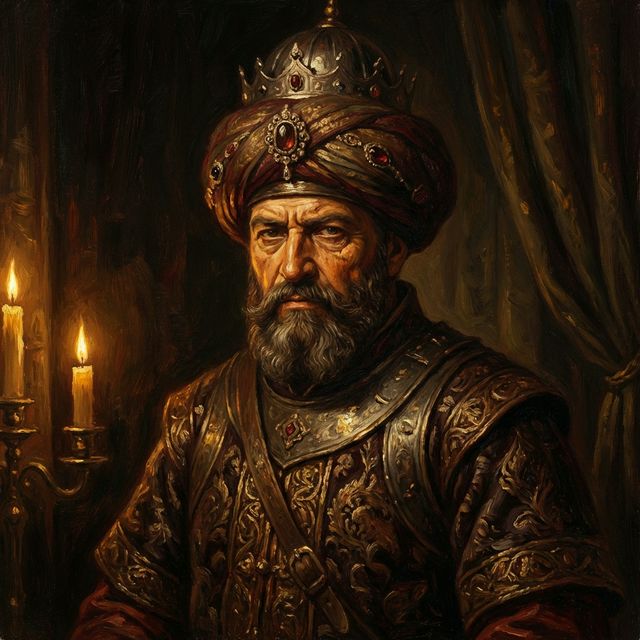
Open any standard Indian history textbook — NCERT or state board — and search for Sikandar Lodi. What you will find is a carefully curated portrait of a ruler who was a "patron of arts", an "efficient administrator", and a man who "contributed to Indian culture." These are not outright lies — they are strategic omissions, presenting only one face of a two-faced coin.
Sikandar Lodi (born Nizam Khan, r. 1489–1517 CE) was the second ruler of the Lodi dynasty and the Sultan of Delhi. His mother was Hindu — a goldsmith's daughter — and some historians suggest this may have driven his particularly zealous adoption of orthodox Sunni Islam, as if to compensate for his mixed heritage.
This is not unique to Sikandar Lodi. Across Indian history education, there exists a documented pattern of presenting medieval Islamic rulers through a lens that emphasizes their administrative achievements while minimizing or completely omitting their documented religious persecution. This pattern has been noted by multiple historians including Sita Ram Goel, Arun Shourie, and K.S. Lal in their scholarly works.
Textbooks highlight that Sikandar Lodi was himself a poet, writing Persian poetry under the pen name "Gulrukhi" (meaning "rose-faced"). He commissioned the translation of Sanskrit medical texts into Persian (Tibb-i-Sikandari). He patronized scholars and maintained a learned court.
While translating Sanskrit texts into Persian, Sikandar Lodi simultaneously destroyed the very institutions that produced them. He razed Hindu temples that served as centers of learning, displaced Sanskrit scholars, and established a theocratic state that suppressed non-Islamic education. The translation of medical texts was not preservation — it was appropriation followed by destruction of the original.
As noted by historian Muhammad Qasim Ferishta: "He had a passion for vandalising Hindu temples" — this from a historian who was otherwise sympathetic to Islamic rulers.
Textbooks praise his administrative reforms: the introduction of the Gaz-i-Sikandari (standardized land measurement), abolition of corn duties to help peasants, establishment of Agra as a major administrative center (1504 CE), and the maintenance of an efficient espionage system.
The same "efficient administration" reimposed the Jizya (discriminatory poll-tax) on all Hindus. It established Sharia courts in even small villages, imposing Islamic law on a majority Hindu population. His espionage system — praised in textbooks — was partly used to ensure compliance with his religious edicts.
He also imposed pilgrim taxes on Hindus visiting their own sacred sites — effectively monetizing their faith while simultaneously destroying those very sites.
Textbooks mention the compilation of Lahjat-i-Sikandar Shahi, a book on Indian musical compositions commissioned during his reign. They portray him as a ruler who appreciated Indian cultural traditions.
While supposedly "appreciating" Indian culture, Sikandar Lodi simultaneously:
Perhaps the most telling omission is Sikandar Lodi's epithet: "But-Shikan" — literally, "Destroyer of Idols". This was not a title given to him by his enemies. This was a title he earned and bore with pride, documented by his own court historians and by medieval Islamic chroniclers who considered it a mark of religious virtue.
Try searching for "But-Shikan" in any standard Indian textbook. You won't find it. A ruler's own defining epithet — the name by which he was known in his own time — has been systematically erased from educational materials.
Multiple scholars have pointed to a systematic approach in post-independence Indian historiography that sought to minimize communal tensions by de-emphasizing the religious dimensions of medieval rule. While the intention may have been social harmony, the result has been the erasure of documented historical reality — denying victims their history and preventing honest reckoning with the past.
As historian Sita Ram Goel documented in his multi-volume work "Hindu Temples: What Happened to Them" — the pattern of temple destruction by medieval Islamic rulers, including Sikandar Lodi, is extensively documented in Islamic historical sources themselves. These are not Hindu allegations — these are recorded by Muslim historians who considered these acts praiseworthy.
Understanding why these omissions exist requires looking at the intellectual environment of post-independence India. Several factors contributed:
Post-independence Indian historiography deliberately promoted a narrative of "composite culture" (Ganga-Jamuni Tehzeeb) — the idea that Hindu-Muslim interactions were primarily harmonious. While this narrative served the noble goal of communal harmony, it required the systematic minimization of documented persecution.
Influential historians of the Marxist school — including Romila Thapar, Irfan Habib, and others — tended to analyze medieval Indian history primarily through economic and class lenses rather than religious ones. Temple destructions were reframed as "political acts" rather than religious persecution, even when the perpetrators' own historians described them in explicitly religious terms.
Various political parties across the spectrum have used historical narratives for electoral purposes. The suppression of medieval persecution narratives served specific political agendas, while their overemphasis served others. Lost in between is the simple truth as documented in primary sources.
There existed a genuine fear that honest discussion of historical religious persecution would fuel communal tensions. However, as many scholars have argued, sustainable social harmony cannot be built on the suppression of documented historical truth. Truth and reconciliation require truth first.